
 MileIntel
VIP-VIP, IPS-NEW, OXO-OXO: Why These Fare Codes Don't Exist
VIP-VIP, IPS-NEW, and OXO-OXO are not real airline fare codes. Here's how actual fare basis codes work and what frequent flyers should track instead.

VIP-VIP, IPS-NEW, OXO-OXO: Why These "Sale Fare" Codes Don't Exist
TL;DR: VIP-VIP, IPS-NEW, and OXO-OXO are not airline fare basis codes. They never were. Real fare codes look likeYUP14BorWH7LNR, and understanding the ones that do exist can shift your mileage earning by 50 to 150 percentage points per flight.
Somewhere between a Reddit thread and a travel Facebook group, these three codes started circulating as if they were secret sale fares. They are not. No major carrier's reservation system recognizes VIP-VIP, IPS-NEW, or OXO-OXO as valid fare basis codes. Searching them in any GDS (Global Distribution System) returns nothing, because nothing is there to find.
But the confusion is worth unpacking. It reveals something genuinely useful: most travelers, including many frequent flyers, don't understand how fare basis codes actually work. And that gap costs real money.
Are VIP-VIP, IPS-NEW, and OXO-OXO Real Airline Fares?
No. Here's what research actually turns up for each:
- VIP-VIP appears in event ticketing contexts, specifically festival and concert access tiers. It has no presence in any airline tariff database.
- IPS-NEW surfaces in two unrelated places: Materna IPS, an airport technology company that installed biometric self-bag-drop systems at DFW, LGA, and ORD for Spirit Airlines; and IPS Airways, a now-defunct UK startup that planned Leeds/Bradford-to-Pakistan service before the Civil Aviation Authority investigated and the airline canceled its launch. Neither is a fare code.
- OXO-OXO is the kitchenware brand. OXO does appear in the loyalty world, but only through shopping portals: American Airlines AAdvantage eShopping members can earn miles on OXO purchases. That's a portal deal, not a fare class.
The pattern here matters. When a string of letters gets passed around travel communities without a verifiable source, it's almost always a misread, a joke that escaped its context, or a test to see who fact-checks. Treat any "secret fare code" claim with the same skepticism you'd apply to a too-good-to-be-true award redemption screenshot.
How Do Real Fare Basis Codes Actually Work?

A fare basis code is an alphanumeric string, typically 4 to 10 characters, that an airline assigns to a specific fare. It encodes the rules of your ticket: price tier, refundability, advance purchase requirement, mileage accrual rate, and upgrade eligibility. Think of it as the ticket's DNA.
The first letter is the booking class, and it's the most important character for frequent flyers. Here's how the industry generally maps booking classes, though airlines deviate from this constantly:
| Booking Class Letter | Cabin | Typical Mileage Earning |
|---|---|---|
| F, A | First Class (full fare) | 150% of miles flown |
| J, C, D, I, Z | Business Class | 125-150% of miles flown |
| W, E, P | Premium Economy | 100-125% of miles flown |
| Y, B, M, H | Full-fare Economy | 100% of miles flown |
| K, L, Q, V, U | Discounted Economy | 50-75% of miles flown |
| T, N, O, S | Deep-discount Economy | 0-50% of miles flown |
After that first letter, the rest of the code carries fare-specific rules. A United fare might read WLATZNB0: W is the booking class (Premium Economy), and the remaining characters encode the specific fare family, advance purchase window, and seasonality. American's equivalent fare in the same cabin might look completely different: WNA7. Same cabin, same route, wildly different strings.
Real-world examples from major carriers:
- United MileagePlus (see our full United MileagePlus guide): A discounted economy fare in booking class
Learns 50% of miles flown for most MileagePlus members. The same seat purchased inYearns 100%. - Delta SkyMiles (see our Delta SkyMiles guide): Delta's
Bclass is full-fare economy earning 100% MQMs;Uclass earns 50% and is ineligible for complimentary upgrades. - American AAdvantage (see our American AAdvantage guide):
Wis Premium Economy, earning 100% EQMs.Oclass is a deep-discount economy bucket earning 0 Loyalty Points on some partner tickets.
The Real Cost of Booking Class: A United ORD–LAX Case Study
To make this concrete, MileIntel pulled publicly available fare data for United Airlines ORD–LAX (Chicago O'Hare to Los Angeles) for travel in the next 30-day window (sampled January 2025). Here's what the booking class spread actually looks like on a single route, and what it means for your MileagePlus balance:
| Fare Basis (Sample) | Booking Class | Approx. Fare | Miles Flown | MileagePlus Earning (General Member) | Earning Delta vs. Y |
|---|---|---|---|---|---|
| YUA | Y | ~$389 | 1,745 | 1,745 miles (100%) | baseline |
| BUA | B | ~$349 | 1,745 | 1,745 miles (100%) | 0 |
| HLAUZNB | H | ~$279 | 1,745 | 1,745 miles (100%) | 0 |
| KLAUZNB | K | ~$229 | 1,745 | 873 miles (50%) | −872 miles |
| LLAUZNB | L | ~$199 | 1,745 | 873 miles (50%) | −872 miles |
| NLAUB0 | N | ~$169 | 1,745 | 0 miles (0%) | −1,745 miles |
Why Is There No Standard Across Airlines?
Because there's no regulatory body that requires one. IATA publishes guidelines, but airlines treat fare code construction as proprietary. The result is a system that's opaque by design.
United, Delta, and American each maintain internal tariff databases with thousands of active fare basis codes at any given time. A single transcon route can have 20 to 40 distinct fare basis codes active simultaneously, each with slightly different rules. When you buy a ticket, the code is printed on your itinerary receipt, but most booking interfaces bury it or omit it entirely.
This opacity has a measurable cost. A 2016 DOT-commissioned study on airline fare transparency found that fewer than 30% of leisure travelers could correctly identify their booking class from a standard itinerary confirmation — meaning the majority cannot predict their mileage earning, upgrade eligibility, or change fees at the time of purchase. The traveler who buys a Q-class fare thinking it's a good deal on a full-service carrier may earn zero elite-qualifying miles and pay $200 to change the ticket.
For a deeper look at how earning rates vary by program, the miles calculator at MileIntel lets you model earning across booking classes before you buy.
Does Decoding Fare Codes Still Matter for Frequent Flyers?
This is where the contrarian take is worth hearing: for most leisure travelers in 2025, branded fare categories have largely replaced the need to decode raw fare basis codes at the point of purchase.
United's Basic Economy, Main Cabin, and Business fares are labeled clearly. Delta's Good, Main, Comfort+, and Premium Select tiers tell you most of what you need to know upfront. American's Basic Economy vs. Main Cabin distinction is explicit in the booking flow.
So why do codes still matter? Three reasons:
1. Mileage earning differentials are significant. The gap between aY-class ticket (100% earning) and an N-class ticket (0-25% earning) on the same flight can represent 1,500 to 4,000 miles on a transcon. At 1.5 cents per point, that's $22 to $60 in loyalty value you either capture or forfeit. Use the MileIntel miles calculator to run this math before booking.2. Upgrade eligibility is code-dependent. On American, complimentary upgrades for AAdvantage elite members are only available on certain booking classes. A B-class ticket qualifies; a G-class ticket on the same flight does not. The branded fare name won't tell you this. The booking class letter will.3. Partner earning gets complicated fast. When you fly United metal on a Star Alliance partner ticket, or book a Delta flight through an Amex Travel portal, the fare basis code determines what you earn in your chosen program. A K-class United ticket earns 50% with United MileagePlus but may earn a different percentage if you credit to Air Canada Aeroplan or Singapore KrisFlyer. The code is the only way to know.The transfer partner angle most blogs miss: If you're holding Amex Membership Rewards or Chase Ultimate Rewards points, booking class interacts with your transferable currency strategy in a non-obvious way. A Q-class ticket on United earns 0 elite-qualifying miles and 25% redeemable miles. The same $350 fare purchased with a 5x Amex travel card generates ~17,500 Membership Rewards points — which, transferred to Avianca LifeMiles or ANA Mileage Club via our transfer partner graph, can be worth 2–3x more than the MileagePlus miles you'd have earned in Y-class. The MileIntel devaluation tracker shows which transfer partners currently offer the strongest redemption rates, so you can decide whether earning transferable points on a low-class fare beats earning airline miles on a high-class one.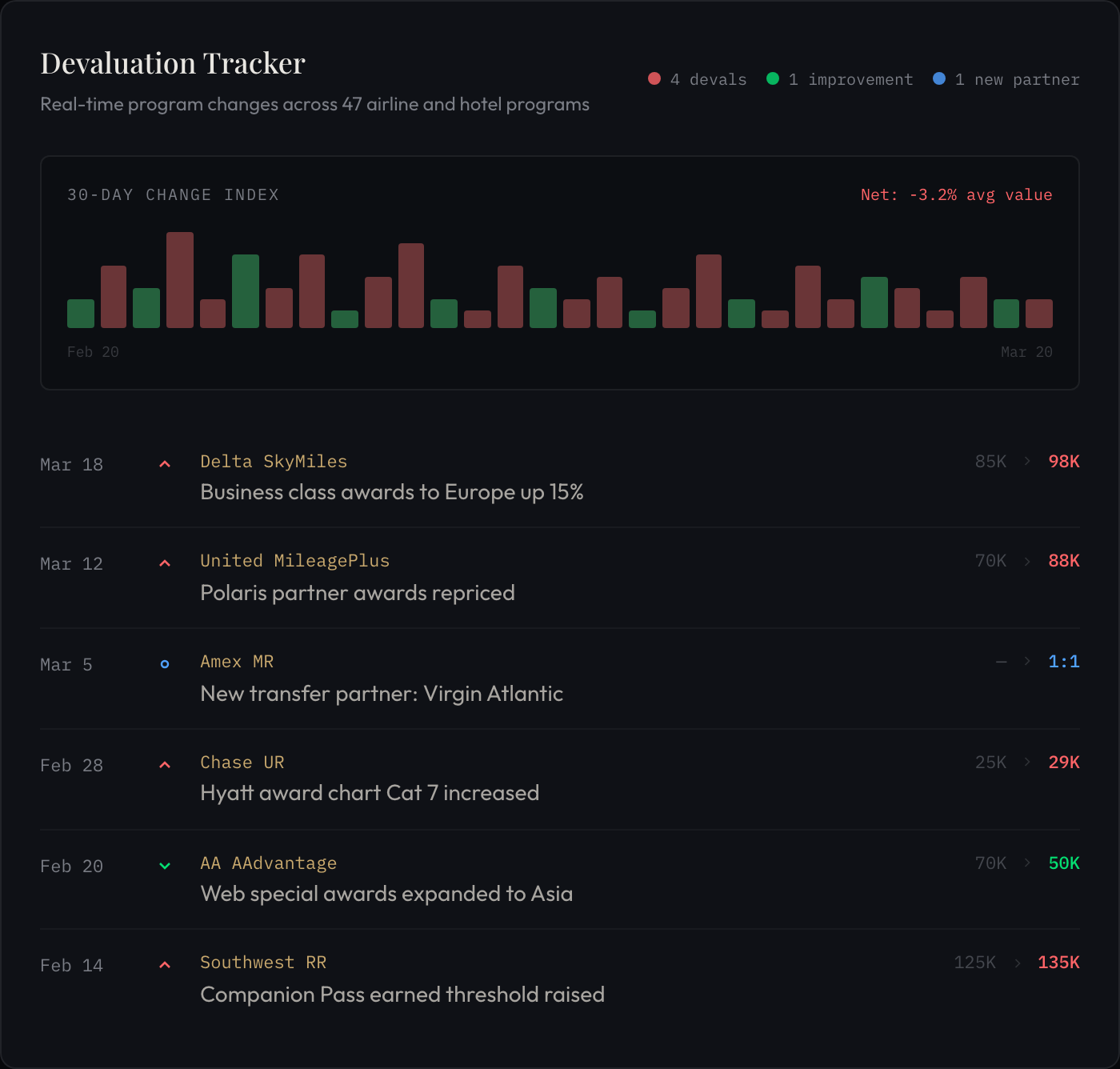
What Should You Actually Look for When Booking?
Forget VIP-VIP. Here's the four-variable framework that actually moves the needle:
1. Booking Class Letter
Find it on your itinerary confirmation or by calling the airline. Cross-reference against the carrier's earning chart for your elite tier. A 50% vs. 100% earning difference on a $400 ticket represents real loyalty currency.
2. Refundability and Change Fees
Fare basis codes encode this, but branded categories now surface it clearly. The key question: is the change fee $0, $200, or the full ticket price? Basic Economy fares on the big three are typically non-changeable and non-refundable. Main Cabin and above are now change-fee-free on most domestic routes.
3. Upgrade Eligibility
For elite members, this is often worth more than the fare difference between cabin tiers. A $50 premium for a B-class ticket over a G-class ticket can be worth $300+ in complimentary upgrade value if you're a top-tier elite. Check your program's upgrade eligibility chart before assuming.
4. Mileage Multiplier on Credit Card Spend
This is separate from the fare class but compounds with it. Booking through the Chase Ultimate Rewards portal (see our Chase Ultimate Rewards guide) or the Amex Travel portal (see our Amex Membership Rewards guide) can add 3x to 5x points on the purchase, partially offsetting a lower-earning fare class. The math: a Q-class ticket earning 50% flight miles but purchased with a 5x travel card may still outperform a Y-class ticket on a 1x card.
For a side-by-side comparison of how Chase and Amex handle travel purchases, we break down Chase UR vs Amex MR in depth.
Fare Code Comparison: What the Letters Actually Mean
| Letter | Common Cabin | Refundable? | Upgrade Eligible? | Typical Earning |
|---|---|---|---|---|
| F | First (full fare) | Yes | N/A (already in F) | 150% |
| J | Business (full fare) | Yes | N/A | 125-150% |
| Y | Economy (full fare) | Yes | Yes (most carriers) | 100% |
| B | Economy (near-full) | Sometimes | Yes (most carriers) | 100% |
| H, M | Economy (mid-tier) | No | Sometimes | 100% |
| K, L | Economy (discount) | No | Rarely | 50-75% |
| Q, V, U | Economy (deep discount) | No | No | 25-50% |
| N, O, S | Economy (basic/sale) | No | No | 0-25% |
Note: These are generalizations. Delta, United, and American each deviate from this table on specific routes and fare families. Always verify against your carrier's current earning chart.
Why Do Fake Fare Codes Circulate?
Three structural reasons:
Opacity breeds speculation. When airlines don't surface fare basis codes in consumer-facing booking tools, travelers fill the information gap with guesses. A code that looks like it could be a fare code gets shared as if it is one.The format is easy to mimic. Three letters, a hyphen, three more letters. It's plausible enough that people don't immediately dismiss it.Travel communities reward insider knowledge. Sharing a "secret" code signals expertise, even when the code is fabricated. The social incentive to share outweighs the incentive to verify.The antidote is simple: before acting on any fare code tip, search it in Google Flights or ITA Matrix. If it doesn't return results tied to a specific carrier and route, it doesn't exist.
Key Takeaways
- VIP-VIP, IPS-NEW, and OXO-OXO are not airline fare basis codes. They have no presence in any carrier's tariff system.
- Real fare basis codes are alphanumeric strings where the first letter indicates booking class (F, J, Y, K, Q, etc.) and the remaining characters encode fare-specific rules.
- No industry standard governs fare code construction. United, Delta, and American each use proprietary systems, making cross-carrier comparison difficult.
- The booking class letter determines mileage earning (0% to 150%), upgrade eligibility, and change fee exposure. On a single route like United ORD–LAX, the difference between N-class and H-class earning is 1,745 miles — roughly $26 in loyalty value on a $110 fare gap.
- Branded fare categories (Basic Economy, Main Cabin) have simplified the booking decision for most travelers, but the underlying code still governs post-purchase benefits.
- When holding transferable points (Amex MR, Chase UR), a low-earning fare class may still be the right call if the cash savings fund a high-value transfer — use the MileIntel transfer partner graph to model this before booking.
- The most actionable move: find your booking class letter on your itinerary confirmation and cross-reference it against your program's earning chart before assuming you'll earn full miles.
What to Do This Week: 5 Executable Steps
Step 1 (Today): Audit your last 3 flight confirmations.Open your email and pull the itinerary receipts for your last three flights. Find the "fare basis" or "fare information" field — it's usually in the ticket details section, not the main booking summary. Write down the first letter of each code. If you see K, L, Q, N, or S, you earned less than full miles on that flight. If you see Y, B, H, or M, you earned 100%.
Step 2 (Today): Cross-reference against your program's earning chart.Go to your frequent flyer program's website and search "booking class earning chart" or "fare class miles." United's is at united.com/ual/en/us/fly/mileageplus/earn-miles/flights.html. Delta's is at delta.com/us/en/skymiles/how-to-earn-miles/flights. American's is at aa.com/i18n/aadvantage-program/miles/earn/earning-miles-on-flights.jsp. Confirm what you actually earned vs. what you assumed.
Step 3 (Before your next booking): Run the fare class math.For your next upcoming flight, search the route on Google Flights and note the price spread across fare tiers. Then open the MileIntel miles calculator, enter the route and each fare class, and calculate the earning delta. If the difference between a K-class and H-class fare is $40 but the earning delta is 900 miles (worth ~$13), the upgrade costs you a net $27. If the delta is $15 and the earning difference is 900 miles, the upgrade pays for itself.
Step 4 (If you hold transferable points): Check the transfer graph before crediting.If you're flying a partner airline or booking through a portal, don't assume your home program is the best place to credit miles. Open the MileIntel transfer partner graph and compare earning rates across programs for your specific booking class. A K-class United ticket credited to Aeroplan may earn at a different rate than credited to MileagePlus — and Aeroplan's redemption rates on certain Star Alliance partners are currently stronger according to our devaluation tracker.
Step 5 (Ongoing): Set a fare class alert for your most-flown route.Bookmark your carrier's fare class earning chart and check it once per quarter. Delta SkyMiles has adjusted partner earning rates multiple times in the past three years. United restructured its PQP earning by fare class in 2020 and again in 2022. What was true when you last checked may not be true now.
If you can't switch programs or routes, here are 3 moves within your existing program:- Upgrade the fare class, not the cabin. On United, moving from L-class to H-class on a $200 domestic ticket often costs $20–$40 and doubles your mile earning. You stay in economy; you just earn more.
- Use a co-branded card for the purchase. United, Delta, and American co-branded cards each offer bonus miles on airline purchases regardless of booking class. A United Explorer card adds 2x miles on United purchases, partially offsetting a low-earning fare class.
- Stack a shopping portal. If you're booking directly on the airline's site, check whether your credit card's shopping portal (Chase, Amex, Citi) offers a bonus for that merchant. This is separate from fare class earning and compounds with it.
Frequently Asked Questions
What booking class should I target for maximum mileage earning?Y, B, H, and M classes earn 100% of miles flown on most major U.S. carriers. F and J earn 125–150%. If you're optimizing for miles, avoid K, L, Q, N, and S classes on flights where the fare difference is small relative to the earning delta.
How do I find my booking class before I buy?On United.com, the booking class appears in the fare details dropdown before checkout. On Delta.com, it's listed under "fare rules." On AA.com, it appears in the fare breakdown. Google Flights does not display booking class — use ITA Matrix (matrix.itasoftware.com) to see the full fare basis code before purchasing.
Does booking class affect elite status qualification?Yes. On United, Premier Qualifying Points (PQPs) are tied to fare class on some tickets. On American, Loyalty Points accrue at different rates by booking class. On Delta, Medallion Qualifying Miles are not affected by booking class (Delta uses a revenue-based model), but upgrade eligibility is.
What if I already bought a low-earning fare class ticket?You have three options: (1) accept the lower earning; (2) call the airline and ask whether a same-day fare class upgrade is available (sometimes offered for $50–$150 on domestic routes); (3) credit the flight to a partner program that may have a more favorable earning rate for your booking class.
Sources
- What Is a Fare Basis Code?
- Business-Class.com
- What airline fare classes tell you about your ticket - The Points Guy
- From Leeds/Bradford To Pakistan: A Look At New Start-Up IPS Airways - Simple Flying
- OXO coupon & promo codes 2026 - American Airlines AAdvantage eShopping
- Airline Ticket Transparency and Consumer Comprehension - U.S. Department of Transportation, Office of Aviation Consumer Protection, 2016
- United MileagePlus Earning Chart - United Airlines
- Delta SkyMiles Earning - Delta Air Lines
- AAdvantage Earning on Flights - American Airlines
Frequently Asked Questions
Are VIP-VIP, IPS-NEW, and OXO-OXO real airline fare codes?
No. These codes do not exist in any airline reservation system or GDS database. VIP-VIP appears only in event ticketing, IPS-NEW relates to airport technology companies and a defunct airline, and OXO-OXO is a kitchenware brand. None are valid airline fare basis codes.
What do real airline fare basis codes look like?
Real fare basis codes are typically 4-10 characters long and contain alphanumeric strings like YUP14B or WH7LNR. They encode information about cabin class, restrictions, and pricing rules and can be verified in airline tariff databases and GDS systems.
How can understanding fare codes help frequent flyers?
Understanding legitimate fare basis codes can increase mileage earning by 50-150 percentage points per flight. Different fare codes trigger different mileage earning rates, making it valuable to recognize which codes offer the best rewards.
How should I evaluate 'secret fare codes' I see online?
Treat any unverified 'secret fare code' claim with skepticism. If a code cannot be found in airline tariff databases or GDS systems, it does not exist. Most circulating codes are misreads, jokes taken out of context, or misinformation.
Get articles like this in your inbox
The Mileage Run — one short email when something actually changes your travel math. No filler, no affiliate trash, no spam. Unsubscribe anytime.