

The 777X vs A380 Long-Haul Trade-Off, Ranked
TL;DR
The Boeing 777X offers a 13% fuel efficiency advantage over the Airbus A380, but this primarily benefits airlines through expanded route networks rather than direct passenger comfort improvements. The real passenger advantage lies in new nonstop routes to secondary cities that the A380 couldn't profitably serve.
Key Takeaways
- 777X has 13% better fuel efficiency per seat than A380, but this is an airline margin benefit that indirectly enables new routes rather than a direct cabin upgrade
- A380 cabin is 63cm wider than 777X, giving it a structural comfort advantage that newer technology doesn't overcome
- 777X's two-engine design enables profitable service to secondary city pairs where A380's four engines and 525-seat capacity would lose money on load factor
- Award travelers benefit most from 777X expansion through new nonstop routes launching with generous award availability to build demand
The Take We're Testing
"The Boeing 777X is the future of long-haul travel. It's more efficient, more modern, and will replace the A380 as the premier passenger experience."
— Consensus view across aviation and loyalty press, 2024–2026
That framing treats the 777X and A380 as sequential generations, where newer automatically means better. It's a reasonable hypothesis. It also collapses five meaningfully different questions into one answer. Let's separate them.
Q1: Does the 777X's Fuel Efficiency Actually Benefit Passengers?

The indirect passenger benefit is genuine, though. A two-engine, 426-seat aircraft can fly profitably between city pairs where a 525-seat, four-engine A380 would bleed money on load factor. That means nonstop routes between secondary cities that currently require a connection through Dubai, London, or Frankfurt. For a traveler routing through a regional hub, the 777X isn't a better seat; it's a different itinerary entirely.
For award travelers specifically, this matters because new routes typically launch with generous availability to build demand. If you're holding Emirates Skywards miles or British Airways Avios, a 777X-operated nonstop to a previously unserved city could represent the best near-term redemption opportunity on either program.
Verdict on the claim: Partially true, but the mechanism is route access, not cabin quality.Q2: Is the A380 Cabin Experience Actually Better for Most Passengers?
The consensus claim: The A380's wider cabin makes it more comfortable, but the 777X's new amenities close the gap.The more precise answer: The cabin width difference is structural and permanent. The A380's main deck measures 6.50 meters wide versus 5.87 meters on the 777X. That 63-centimeter difference translates directly into economy seat width: 18–18.5 inches on the A380 versus 17–18 inches on the 777X.On a 14-hour flight, that half-inch to 1.5-inch difference is not cosmetic. It's the difference between your shoulder touching your neighbor's or not. For the roughly 80% of passengers flying economy, this is the most tangible comfort variable on the entire aircraft, and the A380 wins it structurally regardless of which carrier operates the 777X.
The 777X does counter with legitimate comfort improvements borrowed from the 787 Dreamliner: windows 16% larger than the current 777, higher cabin humidity, and a lower cabin altitude that reduces fatigue on overnight flights. These are real. They just don't offset narrower seats for most passengers.
Verdict on the claim: The 777X closes the gap in amenities; it does not close the gap in economy seat width. The A380 remains the better economy experience on equivalent routes.Q3: Which Aircraft Offers Better Value for Premium Cabin Miles Redemptions?
The consensus claim: The 777X will offer superior premium cabins, making it the better award redemption target.The more precise answer: This depends entirely on the carrier and the timeline.Emirates' 777X will introduce a new 1-2-1 business class configuration and a mid-cabin social lounge. That's a genuine privacy upgrade over the current 2-3-2 layout on some 777-300ER routes. However, Emirates has simultaneously been investing in its A380 fleet, which already offers shower spas and a full bar in first class — features that will not appear on the 777X.
British Airways is retrofitting its entire A380 fleet with new Club Suites and a new First Class product starting in Q2 2026, putting 110 business class seats on the upper deck alone. Lufthansa began flying A380s with a new business class from Munich in April 2026. These aren't aging products waiting to be replaced; they're recently refreshed cabins that will compete directly with 777X premium products on the same routes.
For award redemption strategy, the implication is this: the A380 premium cabin you book in 2026 or early 2027 may be newer than the 777X product that eventually replaces it on the same route. Use the MileIntel miles calculator to compare the points cost against what you're actually getting in cabin generation before assuming the 777X is the automatic upgrade target.
Verdict on the claim: The 777X premium cabin will be competitive, but not categorically superior. The A380 premium product on Emirates, BA, and Lufthansa is not the aging baseline the consensus implies.Q4: Did the 777X's Delay Actually Hurt Passengers?
The consensus claim: The seven-year delay is a frustration for airlines and a setback for passengers who want the next-generation product.The contrarian read: The delay may have accidentally improved the competitive landscape for passengers.With first deliveries now pushed to 2027, airlines that planned their premium product launches around the 777X had two choices: wait, or upgrade the aircraft they already operated. Most chose the latter. Emirates, British Airways, and Lufthansa all committed significant capital to A380 refurbishments during the 2020–2026 window. Emirates has 116 A380s in service and plans to fly them into the 2040s; its newest aircraft carry a 56-seat premium economy cabin in a 2-4-2 configuration with a 40-inch pitch.
The result is a market where the 777X enters service in 2027 competing not against an aging, unrefurbished A380 fleet, but against recently upgraded cabins on an aircraft passengers demonstrably prefer for its quiet, spacious experience. That's a harder competitive environment than Boeing anticipated when the program launched.
For travelers, this is unambiguously positive. You get a better A380 product now, and a genuinely new 777X product later, rather than a stagnant A380 product followed by a 777X.
Verdict on the claim: The delay hurt airlines' planning cycles. It produced better near-term products for passengers.Q5: How Do the Two Aircraft Compare on the Dimensions That Actually Matter?
Here's the side-by-side across the five dimensions most relevant to long-haul travelers:
| Dimension | Airbus A380 | Boeing 777X | Edge |
|---|---|---|---|
| Economy seat width | 18–18.5 inches | 17–18 inches | A380 |
| Cabin noise level | Lower (4 engines, wider fuselage dampens noise) | Higher (twin-engine, narrower) | A380 |
| Window size | Standard | 16% larger than current 777 | 777X |
| Cabin altitude / humidity | Standard | Lower altitude, higher humidity (787-derived) | 777X |
| Typical capacity (2-class) | ~525 seats | ~426 seats | Depends on preference |
| Main deck cabin width | 6.50 m | 5.87 m | A380 |
| Route flexibility for airlines | Low (needs high-demand hubs) | High (profitable on thinner routes) | 777X |
| Premium cabin investment (2026) | Newly refurbished on Emirates, BA, Lufthansa | New product at launch (2027) | Roughly equal |
| Unique amenities (First/Business) | Showers, full bar (Emirates A380) | Social lounge, no shower | A380 |
| Entry into service | 2007 (fleet mature) | Expected 2027 | 777X (newer tech) |
| Emirates fleet commitment | 116 aircraft, flying to 2040s | 270 on order (largest customer) | Both substantial |
Q6: When Does the 777X Actually Change Your Booking Strategy?
The consensus claim: Watch for 777X routes and book them for the best long-haul experience.The more precise answer: That advice is premature until at least mid-2027, and possibly 2028 for widespread deployment.First deliveries are expected in 2027. Emirates, the largest customer with 270 aircraft on order, will likely deploy initial aircraft on its highest-demand routes from Dubai. Lufthansa and other launch customers will follow similar patterns: flagship routes first, secondary markets later.
For the next 12–18 months, the A380 remains the dominant wide-body on major long-haul routes. That's not a consolation prize; it's a recently refurbished product with known award availability patterns.
Practical booking implications by traveler type:
- Economy travelers on A380 routes: Prioritize A380 itineraries over 777-300ER alternatives when the routing works. The seat width difference is real and consistent across carriers.
- Business class award seekers: The A380 refurbishment cycle means you're not waiting for the 777X to get a new product. BA's Club Suites A380 and Lufthansa's new A380 business class are available now. Use the upgrade calculator to model whether current A380 availability beats waiting for 777X launch availability.
- First class redemptions on Emirates: The A380 shower spa and bar are genuinely irreplaceable. Emirates has confirmed these won't appear on the 777X. If you're spending Emirates Skywards miles on a First Class redemption, the A380 remains the product you want.
- Route-optimization travelers: The 777X's efficiency argument is strongest here. Once routes launch, new nonstop city pairs on 777X equipment will likely offer better award availability than mature A380 routes with established demand. Monitor new route announcements from Emirates and Lufthansa starting late 2027.
Key Takeaways
- The 777X's 13% fuel-per-seat advantage over the A380 benefits airlines first; passengers benefit indirectly through new nonstop routes on city pairs the A380 can't profitably serve.
- Economy travelers have a clear preference signal: the A380's 18–18.5 inch seats versus 17–18 inches on the 777X is a structural advantage that no amenity upgrade reverses.
- The seven-year delay forced Emirates, British Airways, and Lufthansa to invest in A380 refurbishments. The 777X enters service in 2027 competing against recently upgraded cabins, not aging ones.
- Emirates A380 First Class retains features (shower spa, full bar) that will not appear on the 777X. For that specific redemption, the A380 is not the inferior product.
- First 777X deliveries are expected in 2027. A380 dominates major long-haul routes through at least the early 2030s on carriers with committed fleets.
Who This Analysis Affects Most
Economy class travelers on 12+ hour routes: The seat width gap is most consequential for you. On routes where both aircraft operate (Dubai-London, Frankfurt-Singapore, London-Los Angeles), actively seek A380 itineraries. The difference between 18 inches and 17 inches is felt, not imagined, on overnight flights.Premium cabin award hunters holding transferable points: If you're sitting on Amex Membership Rewards or Chase Ultimate Rewards and eyeing a business class redemption via British Airways Avios or a transfer to Emirates Skywards, the A380 refurbishment cycle means you don't need to wait for the 777X to access a new premium product. Book the newly refurbished A380 product now rather than speculating on 777X award availability in 2027.Travelers in secondary markets hoping for new nonstops: The 777X's route-flexibility argument is most relevant to you. A 426-seat twin-engine aircraft can open routes that a 525-seat four-engine aircraft cannot justify economically. Watch Emirates and Lufthansa route announcements in 2027 for new nonstop city pairs; those launches typically come with promotional award availability.Loyalty program strategists on Emirates Skywards: Emirates has 270 777X on order and 116 A380s committed through the 2040s. Both aircraft will coexist in the fleet for at least 15 years. The program isn't migrating to one product; it's expanding across both. That means award availability patterns will split by route type, and understanding which aircraft serves which route will matter for redemption planning. The MileIntel devaluation tracker monitors program changes that could affect Emirates Skywards pricing as the 777X fleet scales.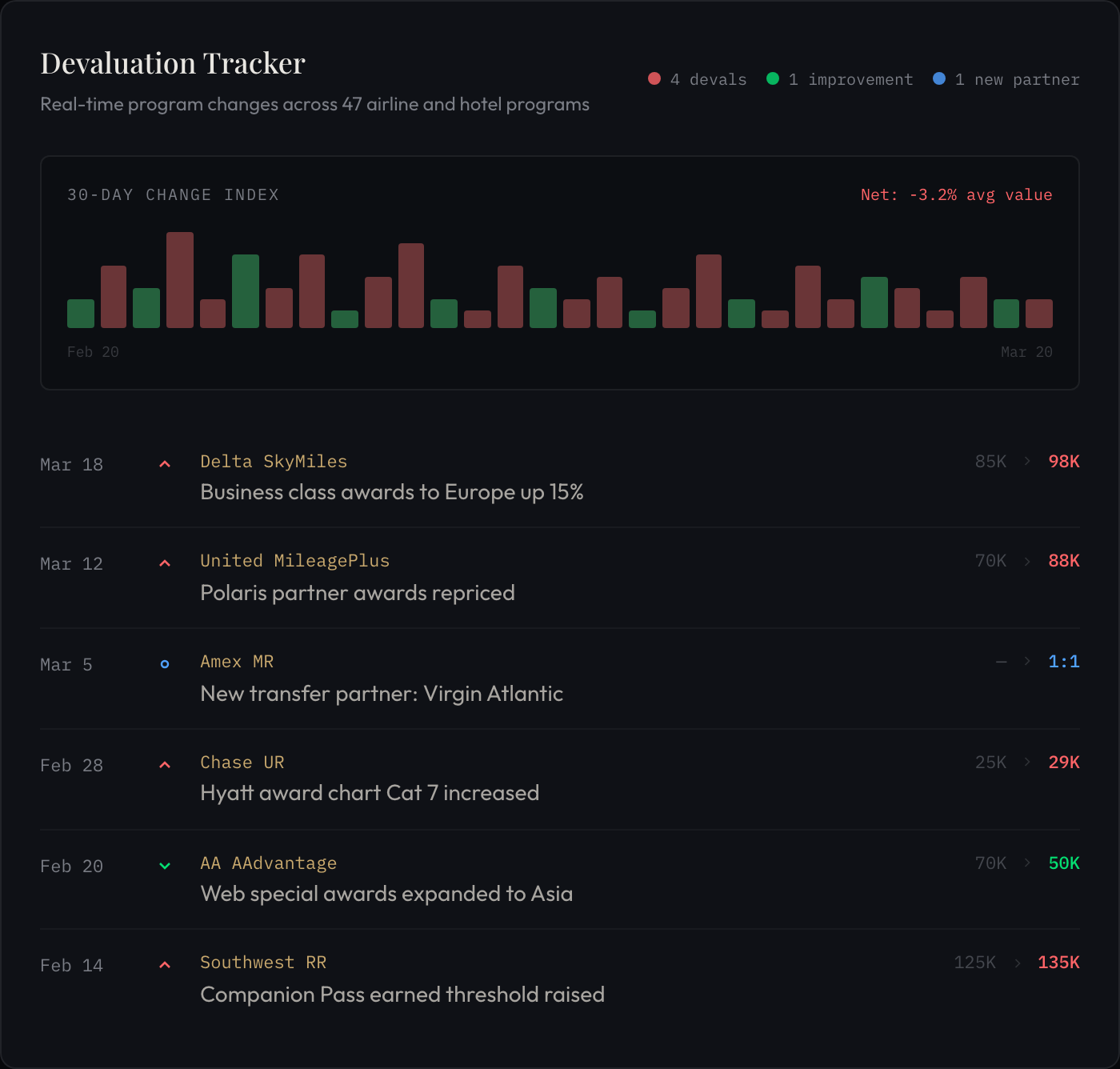
Limitations
This analysis applies to routes where both aircraft types are plausible alternatives. On thin routes where only the 777X is economically viable, the comparison is moot; the 777X is the only option.
Cabin configurations vary by carrier. A 777X operated by Cathay Pacific will not have the same product as one operated by Emirates. The 1-2-1 business class and social lounge cited here are specific to Emirates' announced configuration. Seat width figures for the 777X will vary by airline and cabin configuration once aircraft enter service.
The 2027 delivery timeline is based on current Boeing guidance as of June 2026 and carries meaningful uncertainty given the program's history of delays. Planning a redemption around a specific aircraft type on a specific route in 2027 carries execution risk.
Get articles like this in your inbox
The Mileage Run — one short email when something actually changes your travel math. No filler, no affiliate trash, no spam. Unsubscribe anytime.
Frequently Asked Questions
Is the Boeing 777X better than the Airbus A380 for long-haul travel?+
It depends on what you prioritize. The 777X is more fuel-efficient and enables new routes to secondary cities, but the A380 has a wider cabin (63cm advantage) and larger seating capacity. The 777X isn't a better seat—it's a different itinerary that avoids connections through major hubs.
Does the 777X's fuel efficiency benefit passengers?+
The 13% fuel-per-seat advantage primarily benefits airlines through improved margins. The indirect passenger benefit is genuine: airlines can profitably operate 777X routes between secondary cities where an A380 would lose money, creating new nonstop options that previously required connections.
Which aircraft has better cabin comfort: 777X or A380?+
The A380 has a structural comfort advantage with a cabin 63cm wider than the 777X. However, the 777X compensates with modern amenities. The choice depends on whether you prioritize cabin width or newer aircraft features.
Should I use award miles on a 777X or A380?+
For award travelers, the 777X advantage lies in new nonstop routes to previously unserved secondary cities, which typically launch with generous award availability. If you're choosing between existing routes, the A380 offers superior cabin space, but the 777X may unlock better redemption opportunities on new city pairs.
Sources
- Is It True That The Boeing 777X's Operating Costs Are 20% Lower Than The Airbus A380's?
- Boeing 777X Deliveries Delayed Again, As Certification Issues Drag On Into 2027
- Inside Emirates' Boeing 777X Cabin: What Passengers Gain & Lose Without The Airbus A380
- British Airways Retrofitting A380s With New Cabins, 110(!!) Business Seats
- Review: Emirates' new premium economy cabin on the Airbus A380
- Review: Emirates First Class Airbus A380 (DXB-IAH)
- Boeing 777 vs Airbus A380: Which Wide-Body Aircraft Offers the Best Passenger Experience?
Don't Miss a Departure
Track your miles, catch devaluations before the blogs do, and find the best use of every point you have.
Create Your Free AccountSign up with Google · No credit card required